
Un nuovo sito targato WordPress

The Nursemaids’ Tunnel
Comprehensive restoration programme of one of London’s earliest surviving pedestrian subways
Project Type: Private. Crown Estate Paving Commission
Location: Regents Park, Marylebone, London
Age/Listing: 19th century – Grade II
Project duration: 2022-2025
The Nursemaids’ Tunnel, Regent’s Park, London
One of London’s earliest surviving pedestrian subways, the Nursemaids’ Tunnel connects the two private gardens of the Crown Estate Paving Commission (CEPC): Park Square Garden and Park Crescent Garden.
Historical Background
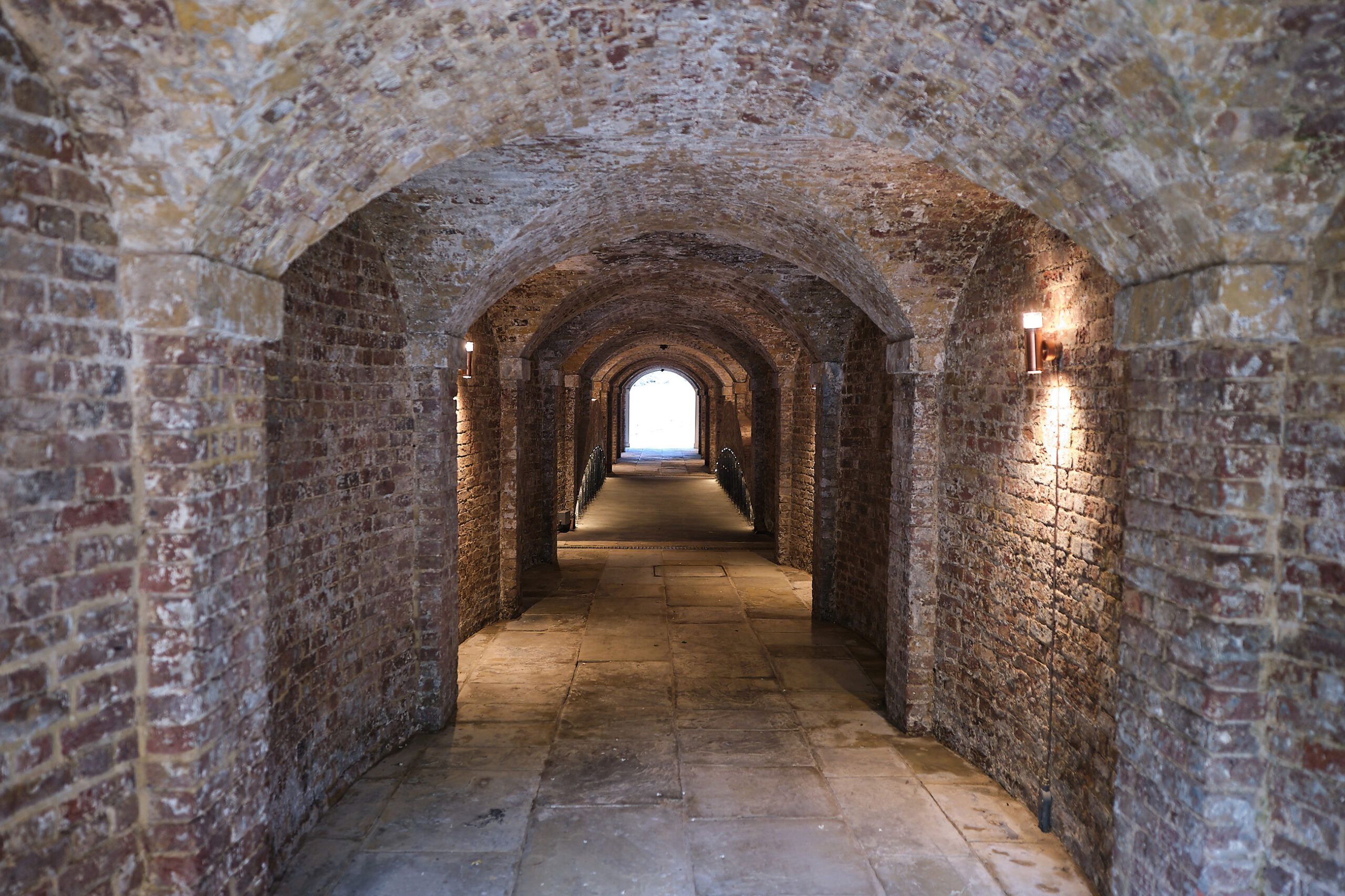
The idea for a pedestrian tunnel was conceived early in the development of Regent’s Park. At the time, crossing the New Road (now Marylebone Road) posed a significant hazard for pedestrians, particularly children and women. In June 1821, residents petitioned for a “subterraneous communication” between the two gardens to avoid the “considerable danger” and “inconvenience” of crossing the busy thoroughfare. Shortly thereafter, a brick-vaulted tunnel was constructed to provide a safe and elegant solution.
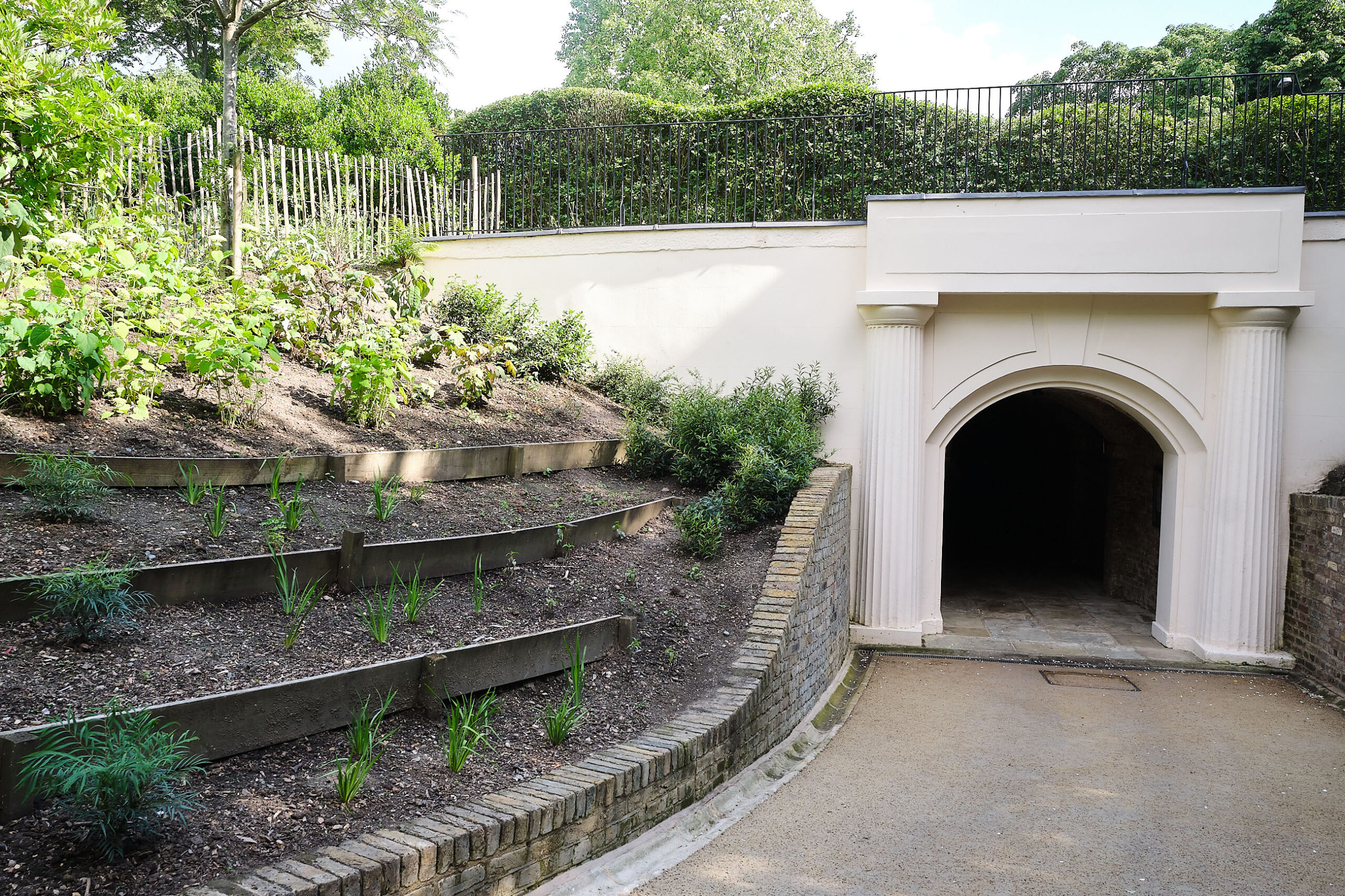
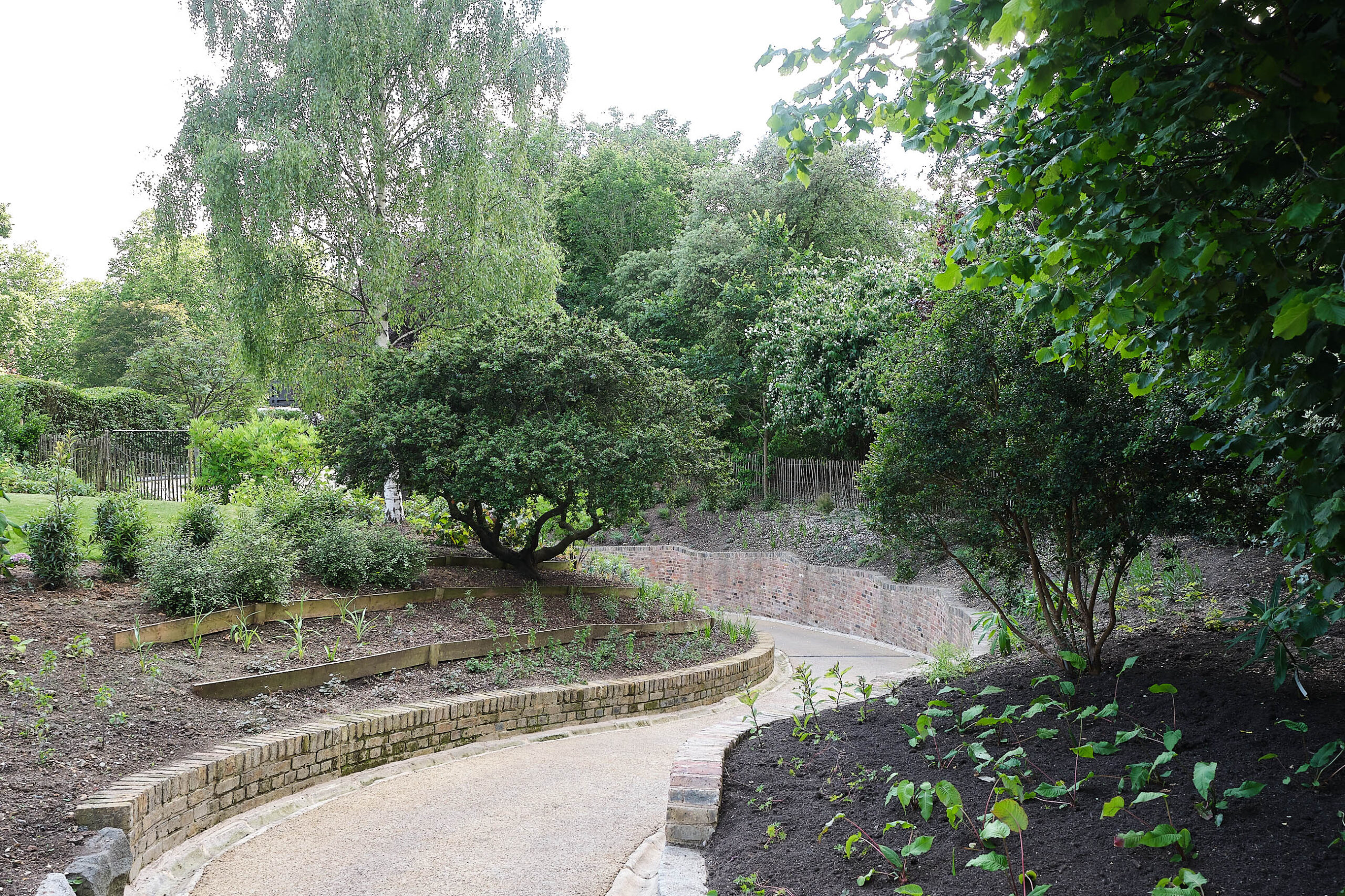
Historical plans—including Charles Mayhew’s 1834 layout—document the tunnel and its curved approach paths, complete with ramps flanked by stone drainage channels and brick retaining walls. The tunnel’s entrances were architecturally refined, faced in stucco and framed by fluted Doric columns with arched openings, topped with simple iron railings. Originally, the interior was likely illuminated by oil lamps.
The passage later became affectionately known as the “Nursemaids’ Tunnel,” due to its popularity among nursemaids pushing perambulators (“prams”) through the gardens. Notably, the Silver Cross pram company was founded in 1877, and the Norland Nanny institution followed in 1892—both significant cultural markers of the time.
During the Second World War, the tunnel took on a new role as an air raid shelter, providing safety in a heavily bombed area.
Just over three decades after its completion, the proposed route of the world’s first passenger-carrying underground railway—the Metropolitan Railway—threatened its existence. However, the influence of local residents led to legislative protection.
The North Metropolitan Railway Act of 1854 explicitly stated that the tunnel was not to be disturbed, declaring that “the Company shall not interfere in any manner whatsoever with the subterranean Passage or Tunnel.” Despite this, the construction of the Metropolitan Railway necessitated some structural intervention into the original fabric of the tunnel. At its centre are two cast iron arches with brick relieving arches above carrying the tunnel over the Railway beneath. The base of the tunnel has also been altered at this point and surfaced in asphalt breaking the linear geometry of the original stone paving, which survives at both ends.
Recent Conservation and Restoration
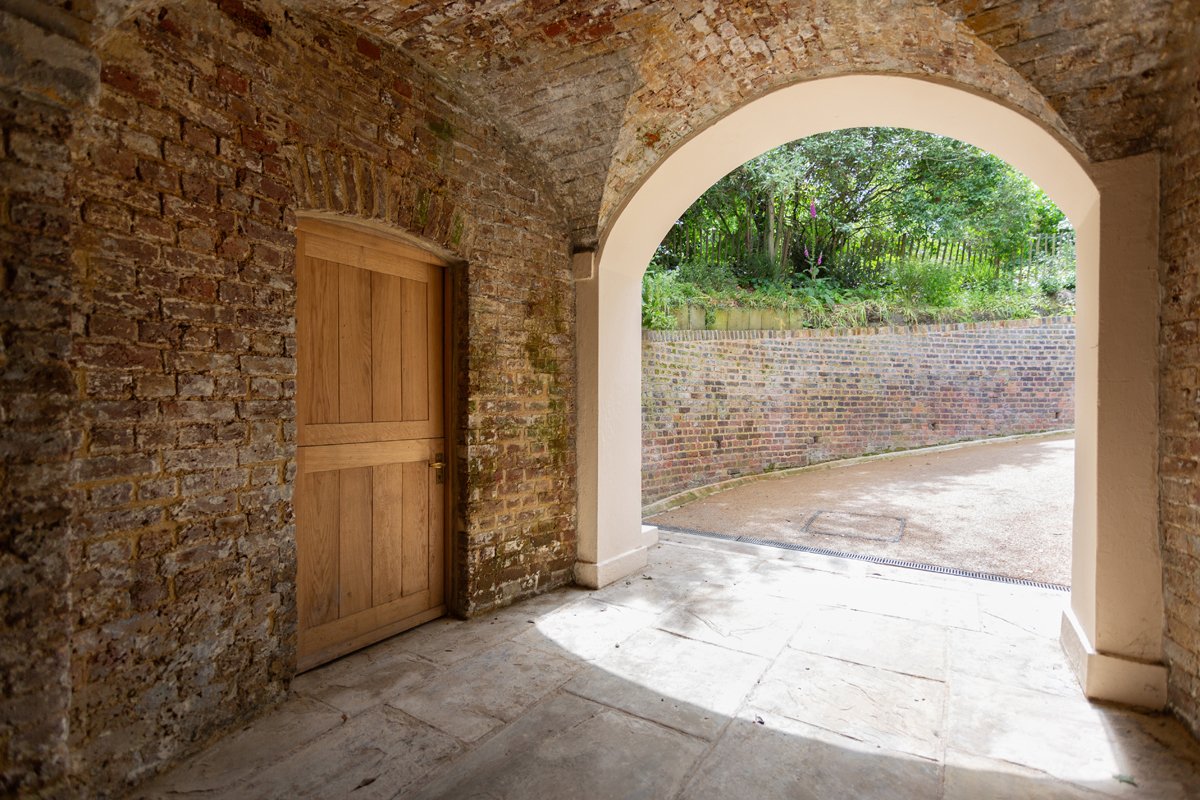
In collaboration with The Crown Estate Paving Commission and specialist contractors Stonewest, a comprehensive restoration programme was undertaken. This included detailed survey work, dismantling and rebuilding of the stock brick retaining walls, and the installation of a reinforced concrete backing structure. New storm drainage was introduced, and the original York stone floor was carefully lifted, restored, and re-laid.
Enhancements continued in Park Crescent Garden, where historic iron railings were meticulously repaired and replicas produced reinstated on the North side of the tunnel, and decades of decaying paint were removed from the tunnel’s interior walls. The project concluded with a full repair, stabilisation, and redecoration of the head walls, reinstating the tunnel’s architectural character and historical integrity.
Cultural
Historic
2022-2025